Preparing for AI in 2026: A Practical Guide for Small and Mid-Sized Businesses
AI is no longer a buzzword in boardrooms or a “nice-to-have” for early adopters. As we settle into 2026, generative AI and automation tools are reshaping how organizations operate, compete, and secure themselves. AI is becoming integral to small and mid-sized business operations as email once was. But the pace of change also brings risks.
AI offers powerful advantages, efficiency, insight, productivity, but it also expands the attack surface, introduces governance and privacy concerns, and creates gaps that attackers can exploit when teams aren’t prepared. According to the Allianz Risk Barometer 2026, artificial intelligence now ranks among the top global business concerns, alongside cyber threats.
The question for many business leaders is not “if we should adopt AI,” but rather “how do we adopt it safely, responsibly, and in ways that help rather than hinder our business?”
In today’s post, we explore how small and mid-sized businesses should approach AI in 2026, from practical use cases to the risks that need governance, and how Roark helps clients harness AI while maintaining secure, compliant, and resilient operations.
AI IS ALREADY EVERYWHERE
Organizations of all sizes are using AI today, whether they realize it or not. AI features are embedded in everything from email and collaboration tools to CRM platforms, finance systems, and workflow automation. And this is just the beginning.
AI adoption is not limited to large enterprises. Research shows that small businesses are increasingly adapting to AI and related cybersecurity threats as they consider funding, training, and operational strategies for 2026.
But with opportunity comes risk:
Data security and privacy: When AI tools require access to internal data, who owns that data? Is customer or employee information exposed? Are privacy settings understood?
Model vulnerabilities: AI systems can hallucinate incorrect responses, produce biased outcomes, or expose sensitive data if improperly configured.
Shadow AI: Unvetted AI tools adopted informally by staff can introduce vulnerabilities, data leakage, and inconsistent governance.
AI is a dual-use technology, powerful when governed, risky when unmanaged. The rising complexity of attacks and AI-assisted exploitation means that preparedness is no longer optional.
HOW SMALL AND MID-SIZED BUSINESSES SHOULD THINK ABOUT AI IN 2026
To prepare strategically for AI, firms should start with a clear understanding of where AI will add value and where it will introduce risk. Here’s how to think about it:
1. Use AI to Enhance Routine Workflows, Safely
AI can automate repetitive tasks and free human time for higher-value work. Examples include
Customer service automation using conversational AI to handle simple requests.
Document and contract analysis to surface key terms or risks faster.
Financial insights and forecasting with AI tools that interpret trends in P&L statements.
The key field of AI adoption is augmentation; AI doesn’t replace humans but extends capabilities
2. Set Up Clear Usage Policies
“Shadow AI”, the use of non-approved AI tools by employees, creates a significant hidden risk. When staff bring in tools without oversight, data may be shared with external systems that have unknown or insecure practices. Practical policies should specify:
Approved AI tools and platforms
Guidelines on what data can (and cannot) be used with AI
Criteria for evaluating new AI tools before adoption
Policies aren’t meant to stifle innovation. They ensure that innovation doesn’t compromise security or operational integrity.
3. Govern Data and Access With Discipline
AI tools are only as good as the data they see, and poor data governance can turn a productivity gain into a privacy breach. Small businesses must understand:
What data is being shared with AI systems
How that data is stored, processed, and secured
What privacy commitments vendors make about your data
Sensitive customer information, employee records, and financial datasets all require oversight and clear policy guardrails before they are used by generative AI tools.
4. Elevate Security Posture With AI-Aware Defenses
AI is not just a risk vector; it’s a tool for defense. Modern cybersecurity tools use AI to:
Detect anomalies in network and user behavior
Automate incident prioritization
Reduce alert fatigue by correlating signals intelligently
Predict emerging threats faster than manual monitoring could ever do
But tools without governance can produce false insights. Skilled oversight, human judgment combined with AI force multiplier, is what turns technology into reliable defense.
REAL-WORLD AI RISKS AND WHY PREPARATION MATTERS
Here are examples showing both the promise and peril of AI as we move through 2026:
AI Is a Top Global Business Risk
According to the Allianz Risk Barometer, AI rose to the second-highest global business risk in 2026, a sign that AI’s influence is no longer confined to tech firms alone.
This underscores two realities:
AI risk is universal, not just a security issue for large enterprises
Preparation and governance matter, businesses cannot treat AI as peripheral
Businesses Are Taking AI Security More Seriously …but Gaps Remain
A recent report shows that while most organizations now assess AI risks before deploying tools, many still struggle with skill shortages and uncertain risk models.
For small and mid-sized businesses, this means you can’t merely adopt AI; you must adopt it with guardrails.
Deepfakes Are Becoming Harder to Detect
Studies show that individuals often overestimate their ability to spot deepfakes, with real-world scams exploiting this overconfidence.
Deepfake technology powered by generative AI can impersonate executives in voice or video, making it a sophisticated social engineering threat that’s no longer confined to large targets.
HOW ROARK TECH SERVICES HELPS BUSINESSES NAVIGATE AI RESPONSIBLY
The best prepared organizations do not treat AI as a miracle cure or an unsolvable risk. Instead, they approach it with strategy, governance, and an expert partner who understands both opportunity and exposure.
HERE'S HOW ROARK HELPS CLIENTS PREPARE FOR AI IN 2026
1. Strategic AI Readiness Assessments
We help clients evaluate where AI can add genuine business value, without introducing unmanaged risk. This includes:
Finding workflows that benefit from AI augmentation
Reviewing data flows and security practices
Assessing governance gaps before adoption
Our assessments prevent businesses from leaping into AI without understanding the consequences.
2. Policy Development and Governance Frameworks
Roark helps clients build AI usage policies that make sense for their business size and industry. We define:
Which tools are approved
How sensitive data is handled
How decisions are logged and reviewed
We build governance with usability in mind so teams can innovate safely.
3. Secure Integration and Identity Controls
One of the largest risks in AI adoption is identity misuse, especially in tools that connect to internal systems like email, CRM, and file storage.
Roark ensures that:
MFA and strong identity protections are enforced
Conditional access and least-privilege principles are in place
AI tools and their permissions are reviewed before deployment
Identity safeguards don’t prevent innovation; they prevent compromise.
4. AI-Aware Cybersecurity Posture
We help clients deploy and manage cybersecurity tools that use AI intelligently while staying grounded in oversight, including:
AI-driven detection tuned to your environment
Continuous monitoring with human validation
Incident response capability aware of AI attack vectors
This blend of automation and expert supervision is what makes defense practical at scale.
5. Vendor Risk Management
AI often comes bundled with third-party platforms. Without oversight, these tools can introduce supply chain risk.
Roark evaluates:
How vendors handle your data
Security practices around AI offerings
Contractual commitments that protect your interests
Proactive vendor risk management ensures you’re not blindsided by exposure through partners.
6. Ongoing Training and Human Oversight
AI is not a set-and-forget tool. Users need context:
What AI tools are allowed
How to interact securely with them
How to find hallucinations or false outputs
When to escalate for review
Roark integrates training into your broader awareness program, so teams are confident, not careless.
A PRACTICAL PATH FORWARD
AI in 2026 is neither a panacea nor a phantom menace. It is a transformative force that small and mid-sized businesses must engage with thoughtfully.
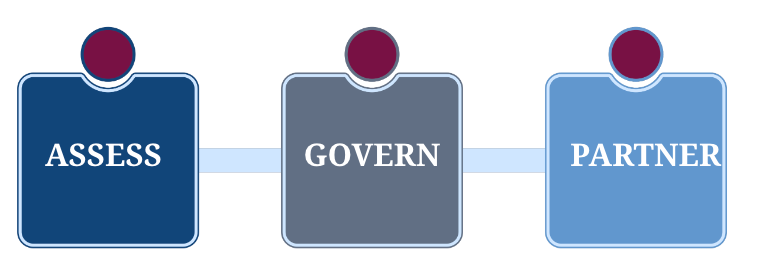
Here’s a simple three-step path to prepare:
Assess: Understand where AI touches your business now and where it could help.
Govern: Build policies and oversight that protect data, privacy, and operations.
Partner: Align with experts who can help operationalize AI safely.
Roark stands ready to be that partner, helping businesses make strategic AI decisions, not blind bets.
As AI becomes woven into everyday operations, the balance between opportunity and risk grows finer. Businesses that prepare for governance, security, and thoughtful adoption will thrive. Those that delay will face competitive and exposure challenges that could have been avoided.
AI is not just another trend. It is a fundamental shift in how business works and how it must be secured. Appropriate oversight, strong identity controls, and a trusted technology partner are no longer luxuries. They are essential.
Ready for 2026? So are we. Let’s prepare strategically, safely, and confidently.
Since 1998, Roark Tech Services has partnered with small and mid-sized businesses to deliver disciplined, risk-managed IT that keeps pace with change without sacrificing control.
Our philosophy is straightforward: your business should own its technology, understand its risks, and adopt innovation on its own terms.
As AI becomes embedded in everyday operations, we remain committed to helping our clients move forward with clarity, strong governance, and the quiet confidence that comes from being secure, prepared, and well advised.